

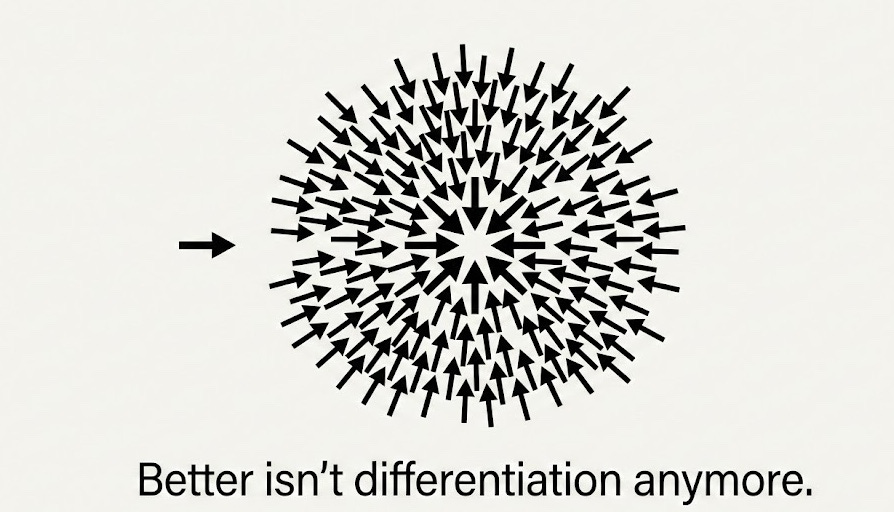
Most founders still think product-market fit is a product problem.
Build something better than what exists.
Add features.
Improve UX.
Ship faster.
Out-execute everyone.
That mindset used to work.
Today, it quietly kills a lot of great companies.
After speaking with more than 250 founders across stages, geographies, and product categories, I keep seeing the same pattern.
It does not vary by geo.
It does not vary by category.
It does not even vary by pricing model.
It varies by one thing.
Whether the market can recognize you fast enough to care.
The old model: win by being better
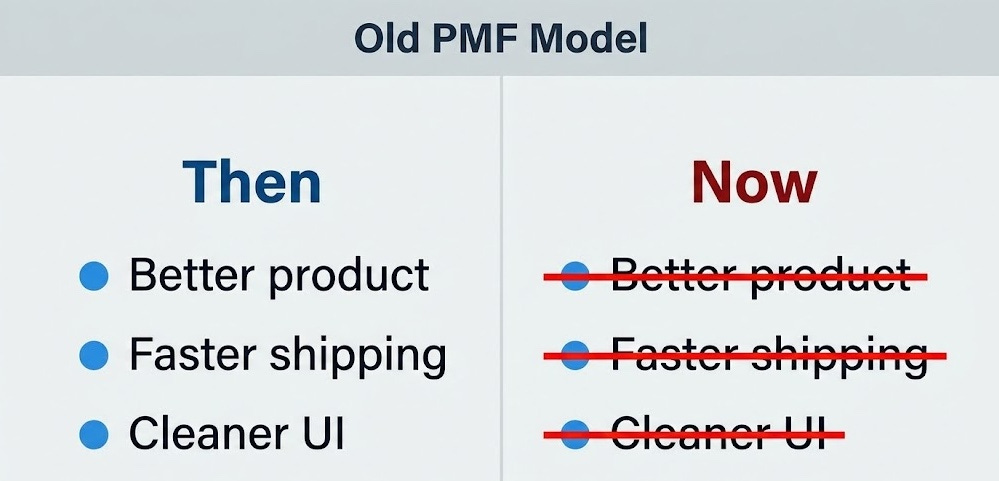
A decade ago, “better” was differentiation.
If your product was 20 percent better, you could earn attention.
If you shipped faster, you could outpace incumbents.
If you had a sharper UI, you could win deals.
Now “better” is table stakes.
AI made “better” cheap.
Everyone can ship faster.
Everyone can add features.
Everyone can look polished.
So buyers do what humans always do when overwhelmed.
They default to what feels familiar.
They pick the safe option.
They avoid evaluating new vendors because it is exhausting.
This is why founders feel like they are doing everything right, but growth feels heavier than it should.
The product works.
Customers like it.
Early deals happen.
But escape velocity never shows up.
The modern constraint: recognition beats differentiation
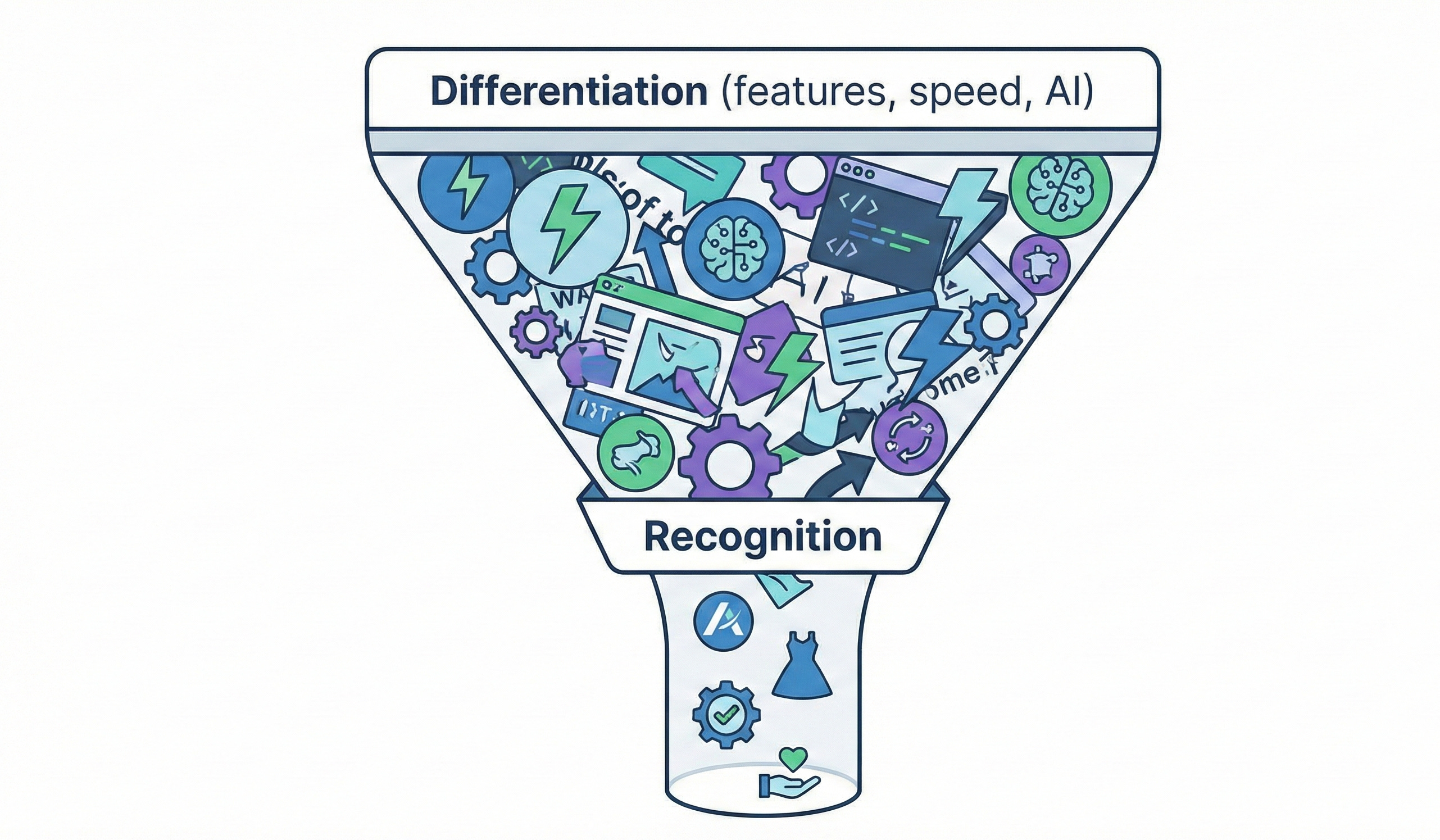
The constraint is not whether you can build something strong.
The constraint is whether a buyer can understand, in seconds, why you exist and why you matter.
In crowded markets, buyers are not evaluating capability.
They are evaluating clarity.
They want to collapse risk quickly.
And the fastest way they collapse risk is not feature comparison.
It is recognition.
Do they understand my world?
Do they sound like people who work with companies like mine?
Do they talk about problems I actually have, without me translating?
If the buyer cannot answer those questions quickly, you are noise, even if you are excellent.
The trap founders fall into: selling math instead of certainty
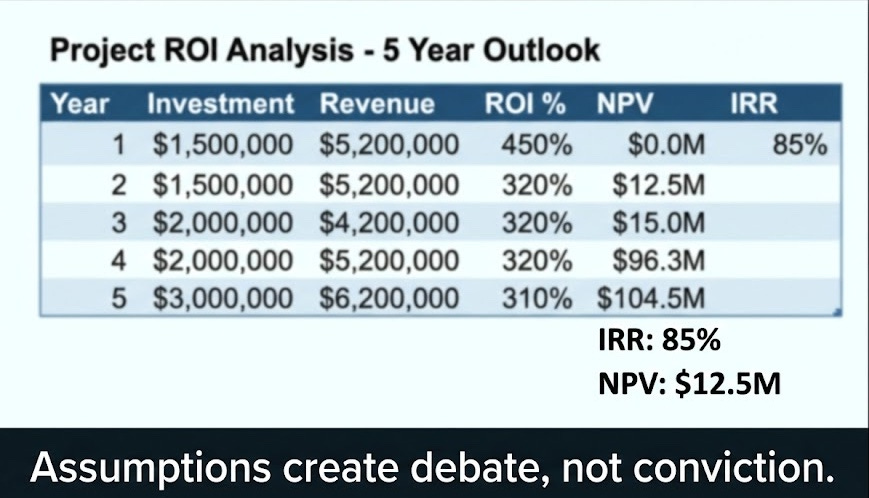
When categories get crowded, founders often reach for ROI math to force belief.
There is a huge number here.
If we win back 10 percent, it is millions.
It pays for itself.
The intent is good.
The result is not.
The moment you lead with percentages, buyers start negotiating assumptions instead of engaging the problem.
Where did that number come from?
How do you know those deals are revivable?
What portion was timing versus competitive loss?
You end up in a conversation you cannot win.
The better move is to sell certainty.
There is real value here.
You are not working it consistently.
We can prove impact quickly.
Earn the right to quantify later.
The only durable advantage: target, not features
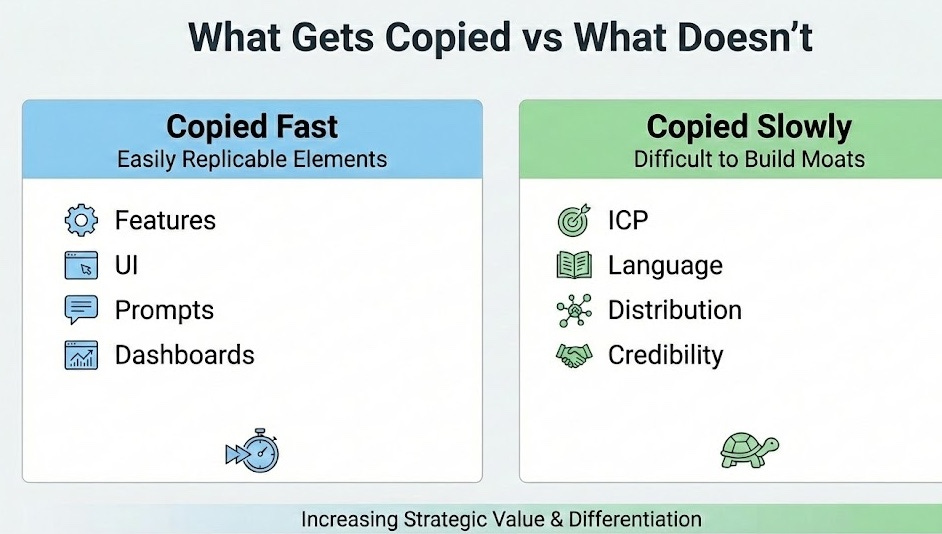
Features get copied.
Workflows get copied.
AI gets copied instantly.
In a world where product parity happens fast, the most durable advantage is not what you built.
It is who you built it for.
Most founders optimize differentiation around capabilities.
The winners optimize around recognition.
Because you can copy a product in weeks.
You cannot copy a posture, a customer set, a language, and a reputation in weeks.
The niche test: if it feels comfortable, it is not small enough
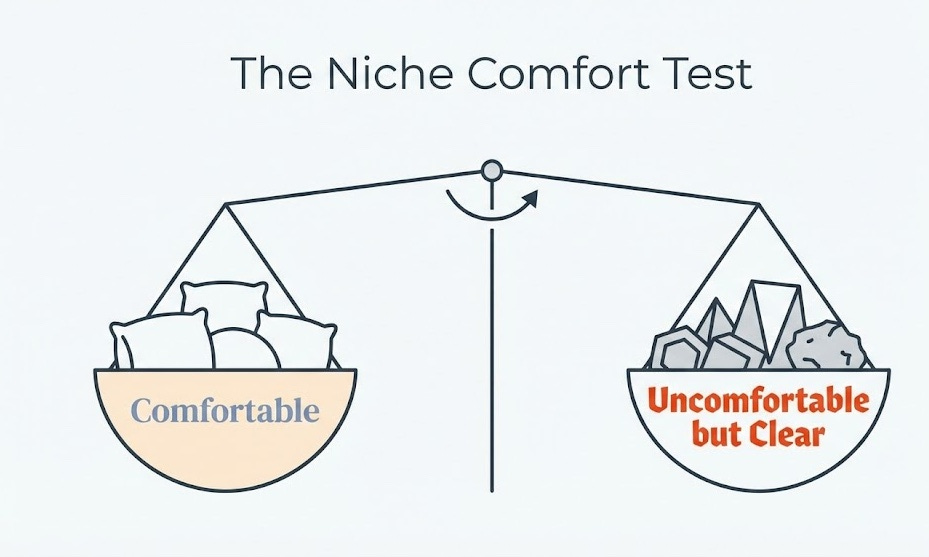
When founders tell me they are niching down, I ask one question.
Does it make you uncomfortable?
If everyone on the team nods and nobody gets nervous, it is not a bet.
Real niches force tradeoffs.
They change who you say no to.
They shape your roadmap.
They affect your messaging.
They determine where you show up and who vouches for you.
They make your company easier to understand and harder to ignore.
The Bezos move: win small, then expand
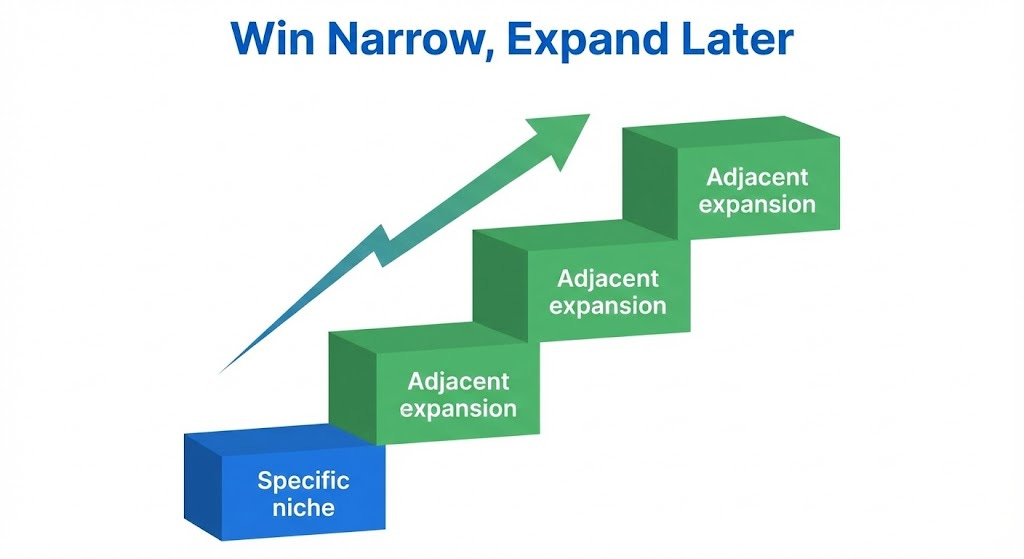
Many founders chase the biggest possible TAM.
They think going smaller is limiting.
It is the opposite.
The companies that win become the obvious choice somewhere specific first.
They earn trust faster because buyers feel understood.
Then they expand.
This is not about playing small.
It is about avoiding the eye of the storm.
You do not outshout a crowded market.
You step slightly to the side and become undeniable.
The punchline
Product-market fit is no longer “better than what exists.”
Everything is better than what exists.
Modern product-market fit is recognition.
How quickly does a buyer feel this was built for me, by people who understand my world, for customers who look like us?
If you can create that feeling, you do not need to convince.
You get pulled.
A question to sit with
If your product is objectively good, but growth feels heavier than it should, ask yourself:
Are we trying to differentiate by adding features, or by becoming recognizable to a specific buyer?
One creates noise.
The other creates gravity.
And gravity wins.
---
**If you liked this, you might also like:**
→ The Sea of Sameness: How B2B Founders Stand Out