

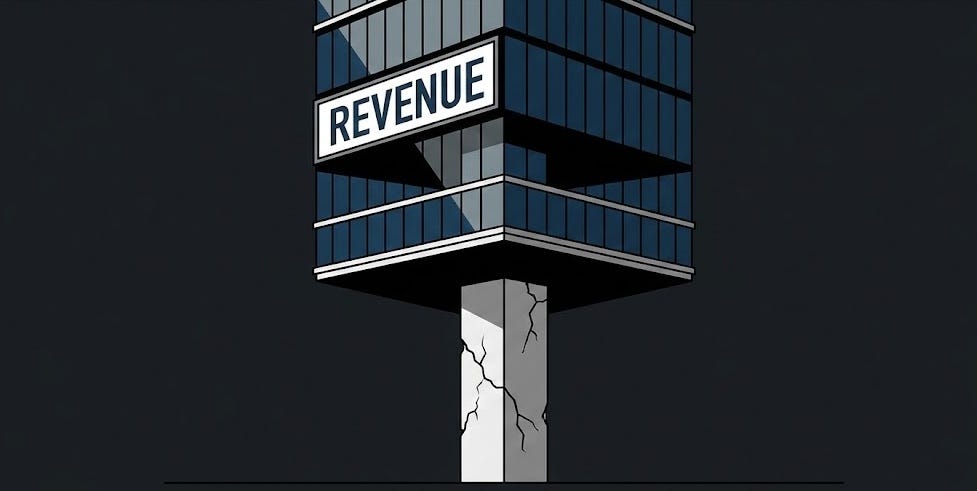
Founder-led sales doesn’t usually fail in one dramatic moment.
It fails in sequence.
Two different problems show up.
They look similar.
They feel connected.
But they are not the same.
Most founders blur them together.
That’s why they keep fixing the wrong thing.
Let’s separate them.
Stage 1: Founder-Dependent Revenue
Where trust lives in the wrong place
This is the first trap.
Almost every founder hits it.
Deals close when you show up.
Buyers trust you.
Pipeline accelerates when your name is on the invite.
Sales exists.
But credibility doesn’t live there.
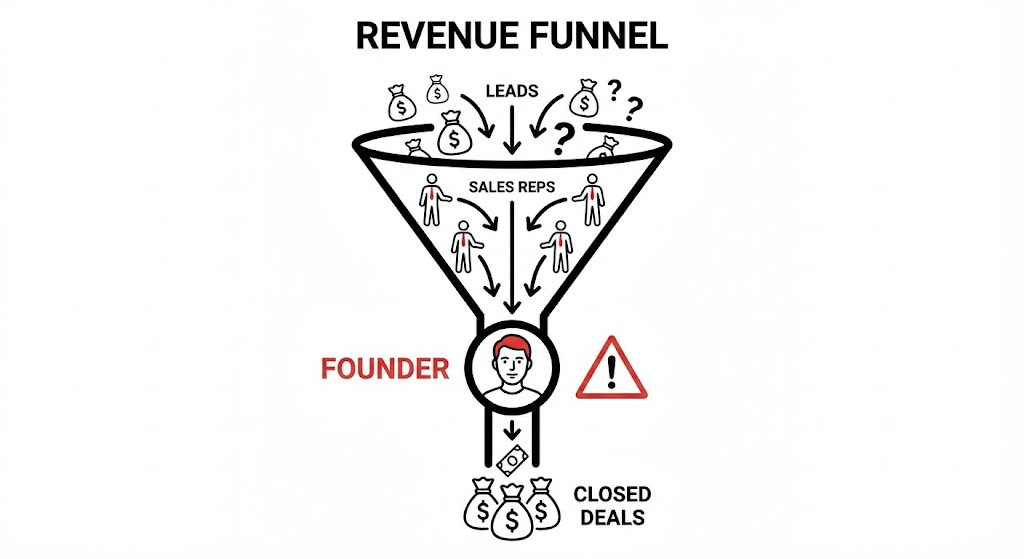
This stage isn’t a failure.
It’s normal.
But it becomes dangerous when founders misdiagnose it.
Instead of asking:
“How do I move trust into the company?”
They ask:
“How do I get myself out of the way faster?”
That’s when Stage 2 begins.
Stage 2: The Star Seller Promotion
When dependency shifts, not disappears
To reduce founder load, a common move happens.
You promote your best AE.
They know the buyer.
They know the pitch.
They generate most of the pipeline.
It feels safe.
Logical.
Earned.
But this is a leadership bet, not a reward.
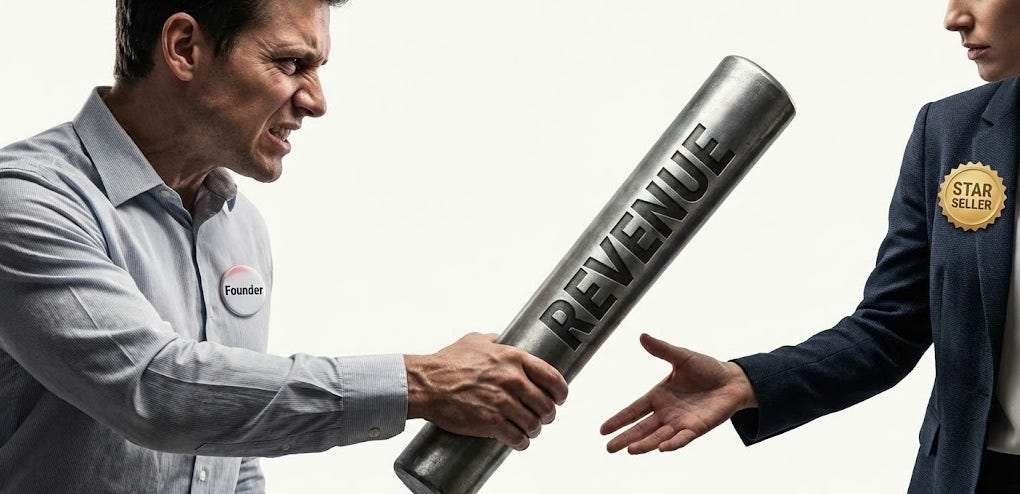
Here’s the problem:
You didn’t remove dependency.
You transferred it.
The founder steps back.
The star seller steps up.
But no system appears in between.
Now revenue depends on a different person.
The critical distinction founders miss
These are two separate problems:
Founder-dependent revenue
→ Trust is attached to the founder
Star seller leadership
→ Leverage is expected from someone who has never built it
They often stack.
They are not the same.
Most founders treat the second as the solution to the first.
It isn’t.
What breaks during the Star Seller stage
Once a top AE is put in charge without systems, patterns emerge fast:
Deals still require escalation
Pipeline quality is hard to diagnose
Roadmap conversations turn into “I need this to close”
Hiring mirrors the leader, not the market
And then the compounding mistake shows up.
They hire people who look like them.
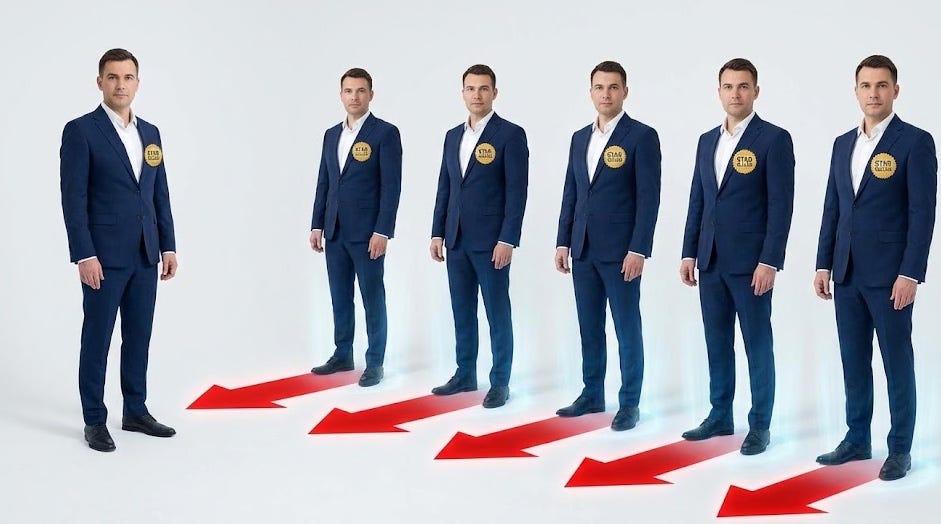
Same background.
Same instincts.
Same blind spots.
The company doesn’t learn.
It copies.
That’s not scale.
That’s replication of risk.
How fear turns this into a hostage dynamic
Here’s the part founders rarely say out loud.
The promotion didn’t come from strategy.
It came from fear.
“This person generates most of our pipeline.”
“If they leave, we’re exposed.”
So the founder locks them in with:
A title
Control
Scope
What they’re really buying is retention.

At this point:
Decisions optimize for the quarter
Hard conversations get delayed
“We’ll fix it later” becomes policy
Revenue still grows.
Learning stops.
That’s the stall.
The litmus test that never lies
Ask one question.
Don’t soften it.
If this person disappeared for 90 days, would revenue still close?
If the answer is no, you don’t have a sales motion.
You have a hero.
And heroes don’t scale.
What founders actually need instead
The goal is not another title.
It’s revenue that works without rescue.
Call it:
Founder-independent revenue
Revenue without heroics
A sales engine that doesn’t need saving
Whatever you call it, it means this:
Deals close without escalation
Pipeline exists without personal leverage
Learning compounds without one person in the middle

That’s leverage.
That’s scale.
Why this isn’t a people problem
This isn’t about ego.
Or incompetence.
Or bad intentions.
It’s about role confusion.
Selling is about persuasion.
Leading sales is about building something that works without you.
When founders confuse the two, they accidentally reward:
Short-term certainty over long-term truth
Familiarity over resilience
Safety over scale
The uncomfortable truth
Founder-led sales doesn’t fail all at once.
It fails when:
Trust stays personal too long
Dependency gets transferred instead of removed
Fear starts driving leadership decisions
If this feels familiar, you’re not behind.
You’re just at the stage most founders never realize they’ve reached.
The ones who see it early get options.
The ones who don’t end up negotiating with the very dependency they created.